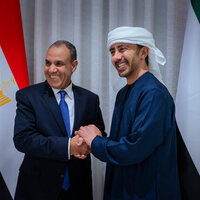



Egyptian President Abdel Fattah al-Sisi this week renewed calls for a common Arab force a proposal that has beendiscussed for yearsbut has never taken shape.
The idea has resurfaced as conflict spreads across theGulf, with Iranian missile and drone strikes hitting severalArabstates in retaliation for attacks by Israel and the United States. The escalation is also raising new questions about how Arab countries should organise their own defence.
Some countries in the region are already tied to defence agreements with theUnited Statesand European powers. Others maintain closer relations withIran. Those differences have made it difficult to agree on a single regional security structure.
Hasni Abidi, director of the Centre for Studies and Research on the Arab and Mediterranean World (CERMAM) in Geneva, says it's difficult to see all Arab states accepting such an alliance.
RFI: What does the idea of an Arab NATO involve?
Hasni Abidi:It is an old idea. During the war inYemen,Saudi Arabiawanted to form an Arab coalition, similar toNATO, against the Houthis. It managed to involve some states, but their participation was largely symbolic and it never succeeded in creating a real military coalition.
As early as 2015, Egyptian PresidentAbdel Fattah al-Sisisuggested forming an Arab military coalition, backed by the United States, to fight terrorism in the region.
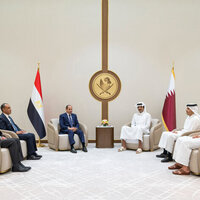
More recently, when Qatar was hit by Iran, the Egyptian president spoke about the need for a common Arab defence to face this challenge.
Today, he has sent his foreign minister to support the Gulf countries, but also to tell them that the current circumstances require a new Arab architecture in other words, a shared defence system run by Arab states themselves.
'War is not a video game': France gauges response to the Middle East conflict
RFI: The idea is not new and has never succeeded. Could the situation today change that?
HA:It is very difficult to imagine all Arab states accepting this Egyptian proposal. Several states say they have no interest in joining a military alliance. They oppose the idea of new blocs or alliances, arguing that bloc politics would only make tensions worse and would not help resolve conflicts.
Gulf countries are also already tied to defence agreements with the United States, as well as with European countries such asFranceand theUnited Kingdom.
Another question concerns the logic behind such an alliance. What would its purpose be? Several Arab states maintain good relations with Iran and even argue that Iran is acting in legitimate self-defence and that it was the one that came under attack. Countries such asIraq,Lebanon,Algeria,LibyaandSudanare therefore not enthusiastic about joining a military coalition directed against Iran.
The proposal put forward byEgyptis also somewhat unclear. What exactly would the alliance do? That said, a coalition of willing states similar to the one supportingUkrainewould be possible. Even then, the Gulf countries themselves remain divided over the idea of a military alliance.
How the war in Iran is testing Europes US military base network
RFI: Do the attacks on Gulf countries because of their alliance with the United States call into question their relationship with Washington?
HA:There is now a debate in Gulf countries about their relationship with the United States. Is this partnership still relevant? The war with Iran has exposed not only the vulnerability of the Gulf states but also what many see as American inaction when it came to protecting their partners, even though they are linked by mutual defence agreements.
There is a growing feeling of abandonment in the Gulf. Leaders say they were not heard byDonald Trumpdespite their close relationship with the US president. From the start, they had urged him not to launch a war that could have serious consequences for the region.
This has revived discussion about creating a regional security structure among the Gulf states themselves perhaps even a joint army bringing these countries together.
The problem is that the Gulf states still have no real alternative to the security umbrella provided by the United States. Developing a new approach to regional security would take time.
This interview was adapted from theoriginal versionin French byClaudia Bertram.
Originally published on RFI