

Nicholas Morieson
Download PDF
Nov 20 2025
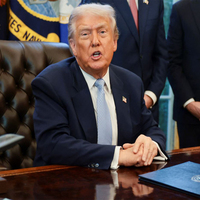
KLYONA/DepositphotosWhenDonald Trump spoke at the Gaza ceasefire ceremonyin Cairo in October 2025, he transformed what would ordinarily have been a solemn diplomatic event into something more akin to a comedy roast. Some of the most powerful people in the world watched as Trump performed a comedy act that involved their almost ritual humiliation. Not only did Trump make jokes at the expense of a variety of Prime Ministers and Presidents, but he accepted, if not demanded, their praise. And praise him they did, calling for Trump to be awarded the Nobel Peace Prize and describing him as a figure of world historical importance. There were other populist leaders present, including Viktor Orban and Giorgia Meloni, but none sought to match Trumps vulgarity or challenge his jokes and insults.
Trump did what, perhaps, no other contemporary leader could do and retain their position. He asked the Pakistani prime minister, Shehbaz Sharif, whether he would nowlive very nicelywith India, and when Sharif gave a halting reply, joked that he was disappointed by the response. He mentioned the absence of Norways Prime Minister, asking,What happened, Norway?He called Italian prime minister Giorgia Melonia beautiful young woman,acknowledging that such a comment could end a political career in the United States, before declaring, Ill take my chances. The audience laughed, as well they might have, because none of them had the courage to tell Trump to his face that his behaviour was inappropriate. Rather than stick to his prepared remarks, Trump drifted freely between stories and asides. He joked about the cost of Egyptian fighter jets, praised their beauty, and reminisced about Air Force One flying over the desert sands. His stories deflated the ceremonys gravity and replaced it with his own comic authority, with Trump as a sort of Don Rickles style insult comedian licensed to dish out the insults at will.
What is particularly interesting about this for those of us interested in Populism, is that Trump both performed as the ultimate authority and power in the world, but also as an anti-elite populist, who with common and crude speech challenged the effete, diplomatic, and ultimately dull world of the global elite. How, then, does Trump retain his status as a populist man of the people while also acting as the most powerful elite politician in the world, essentially bullying the great and the good while demanding they pay him tribute? Perhaps the best way to understand this is to turn toBenjamin Moffitts work on Populism as a political style.Moffitt describes Populism as a performance that thrives on crisis, authenticity, and emotion. Populist leaders distinguish themselves through a deliberate breach of decorum. They act as though their rejection of elite manners proves they are genuine, that their lack of polish makes them more real. In Cairo, Trump embodied this principle with perfect precision.
Moffitt calls this quality bad manners, and it appears to come as naturally as breathing to Trump. While others thanked one another in formal tones, Trump improvised, boasted, and mocked. Even his praise seemed more mocking than genuine. The most powerful figures in the world became his audience, reacting to his rhythm, his pauses, and his jokes. They forced out laugher when required, and did what they could not the cringe when Trump insulted them to their faces. One should, of course, not feel sorry for these supposed global leaders. Their self-abasement before Trump only reveals their own weakness and inability and unwillingness to stand for their own supposed principles. Humourless, boring, and ineffectual, Trumps audience of leaders almost invited their own humiliation at his hands.
Populist figures seem tooccupy two realities at once. They are insiders when exercising power and outsiders when voicing grievance, shifting between the two as political attention demands. This ability to live within contradiction is central to modern populism. It allows elites to appear morally close to the people even as they retain the advantages of their position. For example, Trump is both the most privileged of elites and a man who presents himself as outside the elite order. His vulgar humour allows him to hold both positions at once. He can be the billionaire president of the worlds only superpower and the common man who refuses to act elite.
Trumps Cairo performance demonstrates this dynamic. For example, when Shabaz Sharif rose to call Trumpthe most genuine and wonderful candidate for the Nobel Peace Prize,the man this world needed most, and called him a man history would remember in golden words Trump grinned and replied, Wow, I didnt expect that. Lets go home. Theres nothing more I have to say. Or when he sought to praise fellow right-wing populist Viktor Orbn, saying first,Oh, Victor. Where is Victor? We love Victor,pronouncing the latters name in an exaggerated manner and instructing the audience on the preferred Hungarian pronunciation. Trump jokingly took credit for Orbns re-election, boasting that this occurred due to his endorsement of the Hungarian Prime Minister. He then said that a lot of people dont like Orbn, but that didnt matter, because only Trumps own opinion carried any weight in the world. Trump acted as if he had drawn these people together only to insult them to their faces, at one point saying that among the leaders present there werea few of them [he did not] like at all. But youll never find out who they are.Then he added, Maybe you will, come to think of it.
After telling the leaders of India and Pakistan that they wouldlive very nicely together,Trump told Iraqs Prime Minister that his country had so much oil they didnt know what to do with it all. These digressions had no structure, yet every tangent and aside reiterated Trumps centrality and his power over the other leaders. However, Trumps jokes were not random. They were demonstrations of power disguised as familiarity. Calling Melonibeautifulsignalled that he could transgress where others could or would not, and demonstrated that he was not beholden to the political correctness insisted upon by elites. On the contrary, Trumps vulgarity was proof that despite his wealth and power, he kept touch with the street and the ordinary person.
To many educated people, Trumps speech was hardly amusing. No doubt, many people found it offensive, cruel, even disturbing. But to understand why Trump is such an effective populist we must comprehend how his transgressive performances link power to emotion, and in doing this demonstrate his rejection of the kind of boring managerial politics rejected by a large portion of the American people. Where most world leaders keep to the script, Trumps spontaneity becomes evidence of sincerity. His dominance shows him to be winning the war against the global elite. Indeed, Trumps gift lies in his ability to sustain the role of worlds most powerful man and anti-elite populist at once. Many populists move between being outsiders and insiders depending on circumstance. Trump manages to be both simultaneously. He can receive Egypts highest honour, the Order of the Nile, while behaving like hes Don Rickles at a comedy roast on 1970s television.
For students of populism, the Cairo event is a textbook case of Moffitts claim that populism is performed through crisis and emotion. Yet beyond the event itself, and almost forgotten, Gaza lay in ruins. Inside the room, Trump was making everyone laugh. Perhaps you, reader, laughed at home. Laughter wasnt entirely wrong. What else could one do in the face of absurdity, as the worlds supposed leaders prostrated and humiliated themselves before a man many of them secretly despised? Trump was funny, and they were weak. But the laughter was hollow, because beneath it lay the bodies, almost unnoticed, of the dead.
Further Reading on E-International Relations
- Right-wing Populism and the Attack on Cooperative International Security
- Opinion Populism as an Existential Threat in Israel
- Can Populism Survive COVID-19?
- The Populist Potential of the US and its Fragile Grip on the International System
- Democracy in Virulent Times: Symbols and the Future of National Populism
- Nationalism, Populism, and Institutional Decline: The Parallel Paths of Trump and Netanyahu
About The Author(s)
Nicholas Moriesonis a Research Fellow at the Alfred Deakin Institute for Citizenship and Globalisation at Deakin University, Melbourne, Australia. He is the author of numerous journal articles and three books, most recentlyWeaponizing Civilizationalism for Authoritarianism: How Turkey, India, Russia, and China Challenge Liberal Democracy(Palgrave Macmillan, 2025).
TagsDonald TrumpPopulism